The Image and Student Support Office (ISSO) is one of the permanent and transversal structures providing technical and administrative support to all the activities carried out in and by the UPB.
ISSO’s mission is to communicate, inform and promote the consolidation of the image of UPB and its Schools, and to strengthen the institutional spirit that strengthens relations with the Community.
In line with its mission, the main objectives of this office are to promote and consolidate the institutional image, increase the efficiency of the promotion of this image by attracting new audiences and fostering educational and professional success, and stimulate and improve relations with the external world.
In this context, ISSO’s duties include:
-
- Development of initiatives to welcome and integrate new students;
-
- Supporting and monitoring students’ academic and civic education;
-
- Carrying out activities to publicize the UPB and its training offer and activities to welcome students from other schools and levels of education;
-
- To publicize and promote the UPB in the media or other means, giving priority to local media;
-
- Creation of a network of former UPB students.
Like other UPB structures, ISSO applies the “open door policy”, one of the main axes of UPB’s institutional strategy, and can be contacted by email giape@ipb.pt, telephone [(+351) 273 303 390] or in person:
Image and Student Support Office
Central Services Building > Floor 0, room 34
Campus de Santa Apolónia
5300-253 Bragança, Portugal
Portuguese law defines a volunteer as someone who carries out a set of actions of social and community interest, in a disinterested, non-profit manner, within the scope of projects, programs and other forms of intervention at the service of individuals, families and communities.
A volunteer is an individual who freely, selflessly and responsibly undertakes, according to their abilities and in their free time, to carry out actions on behalf of individuals, families and the community.
To be and act as a volunteer is to have an ideal for doing good things, based on a relationship of solidarity translated into the gratuitousness of the exercise of the activity/function and the communion of the culture and values of the promoting organizations.
UPB’s volunteer program has inherent values and aims:
-
- To encourage students and the rest of UPB’s academic community to form, educate and practice solidarity and tolerance;
-
- Providing the most vulnerable students with the necessary support for their well-being;
-
- Promoting the integration and development of students with special educational needs.
UPB’s volunteer program is aimed at the entire UPB community, in particular the student community.
For more information, see the
SAS-UPB website or contact
voluntariado@ipb.pt.
Food and Clothes solidarity bank
UPB’s volunteer project also includes the Solidarity Bank, which includes the Food Bank and the Clothing Bank.
The Solidarity Food Bank only operates when deemed necessary and students can access this service by registering at
bancosolidario.ipb.pt
The Solidarity Clothing Bank is permanently available, offering home textiles and clothing for men, women and children.
The Solidarity Bank is governed by the principles of environmental sustainability, non-waste, reuse and revalorization, in a circular economy practice.
World Kindness Day
November 13th is World Kindness Day, and the Mentoring Academy volunteers, in partnership with the Academic Association, the African Students Association / Inclusion4All Project and the UPB Brazilian Students Association, are celebrating this day by collecting food, the proceeds of which will be donated to Cáritas, which will arrange for the delivery to UPB students who need this support.
The residences have a range of amenities, guaranteeing comfort and well-being when using the facilities, as well as the necessary conditions for self-study, making a positive contribution to the academic success of the students who use them.UPB currently has five residences, located on the Bragança Campus, with a capacity for 356 students and which are primarily intended for scholarship students, as defined in the welfare system of Portuguese Higher Education Institutions.
The residences have a range of amenities, guaranteeing comfort and well-being when using the facilities, as well as the necessary conditions for self-study, making a positive contribution to the academic success of the students who use them.
The Social Services (SAS-UPB) is the structure responsible for ensuring the school’s welfare functions, in particular the management of student residences and the provision of food services.
UPB currently has five residences, located on the Bragança Campus, with a capacity for 356 students and which are primarily intended for scholarship students, as defined in the welfare system of Portuguese Higher Education Institutions.
The residences have a range of amenities, guaranteeing comfort and well-being when using the facilities, as well as the necessary conditions for self-study, making a positive contribution to the academic success of the students who use them.
(Soon)
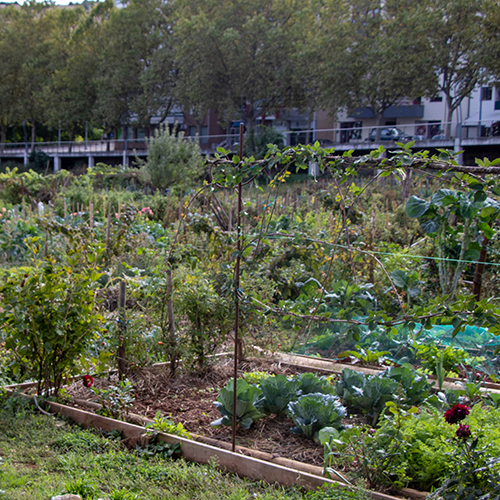
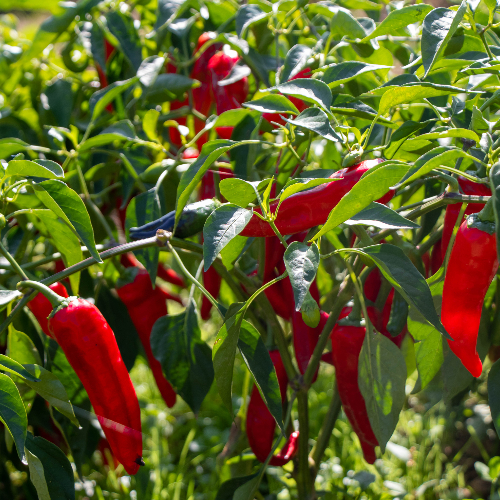
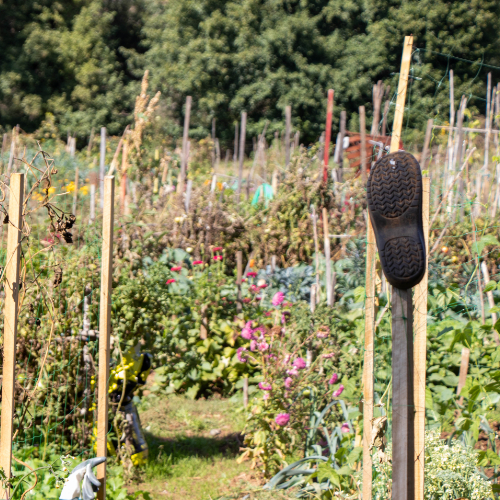
Community vegetable gardens are spaces provided by the UPB for employees and people from the surrounding community to grow organic and, consequently, healthier products. As well as promoting direct contact with nature, they promote contact between the community, the sharing of knowledge and the promotion of healthy living. On the other hand, they contribute to the embellishment of the urban landscape and requalify unoccupied agricultural spaces.
The promotion of sports among students, seen as a factor of education and culture, is an area of permanent concern for UPB and the Social Welfare Services (SAS-UPB).
The administration and management of UPB’s sports facilities – the Quinta da Misericórdia sports complex and the Santa Apolónia Campus sports field – are the responsibility of SAS-UPB.
In addition, UPB establishes multiple partnerships in the community to promote sports, such as making the sports park available to the local community for individual or collective use or, conversely, the use of municipal sports facilities within the scope of the study cycles offered by UPB (for example, Degree in Sports or Master’s Degree in Exercise and Health).
The Regulations for the Use of UPB Sports Facilities are available in the About UPB > Legislation and Documentation menu.