The UPB Business School was created in the context of training/lifelong learning, interaction with the community and the provision of services. Training human resources, improving the quality of management in organizations, responding to the ever-changing world and overcoming challenges based on knowledge are the “ reasons” for this School.
Its main objective is to provide companies and organizations in the region with tailor-made training and on-the-job training (based on postgraduate courses, specializations, microcredentials and/or short courses), using innovative approaches, in collaborative environments and in response to challenges, which enable them to continuously train their human resources and support business innovation processes. The aim is to help economic agents boost their entrepreneurial spirit, innovation and value creation, from a perspective of sustainability, not only economic and financial, but also social.
The school is located in Macedo de Cavaleiros, as part of a partnership established with the municipality, and its activities are completely decentralized.
Find out more at escoladenegocios.ipb.pt
Symbol and coat of arms
UPB has a symbol and a coat of arms.
The symbol is used to project the image and actions of the UPB, representing the unity of the Institute, highlighting its openness to the outside and its evolution and the evolution of the organic units, according to the needs of differentiation and positioning in the context of higher education and the collective feeling of the UPB community.
The use of the coat of arms is reserved for exceptional occasions, where a formal and ceremonial insignia is deemed necessary, and its use must be approved by the President of the UPB, in order to guarantee conformity of use and to ensure that it is reproduced in an appropriate manner.
The use of the symbol and its variants is defined in the style guide published by the UPB and its alteration must be approved by the General Council, with a justified proposal.
Style Guide
Variants of the symbol are available, suitable for most uses (internal and external). In case a variant is required for a different use, or in a different format, please contact UPB’s Image Services at imagem@ipb.pt.
The President is the Institute’s highest governing body and external representative.
The President is assisted by Vice-Presidents and Pro-Presidents.
The President is responsible for the nomination of the UPB Administrator and the Administrator of the Social Welfare Services.
UPB Presidency
President
Orlando Isidoro Afonso Rodrigues
Vice-Presidents
Luís Manuel Santos Pais
Albano Agostinho Gomes Alves
Pro-Presidents
Anabela Rodrigues Lourenço Martins
António José Gonçalves Mourão
Tiago Manuel Cabral dos Santos Barbosa
Vera Ferro Lebres
Américo Vicente Teixeira Leite
Ombudsperson
Elisabete da Anunciação Paulo Morais
Administrator
Carla Cidália Ribeiro da Costa
Social Welfare Services Administrator
Anabela Carvalho Pimentel Rolo
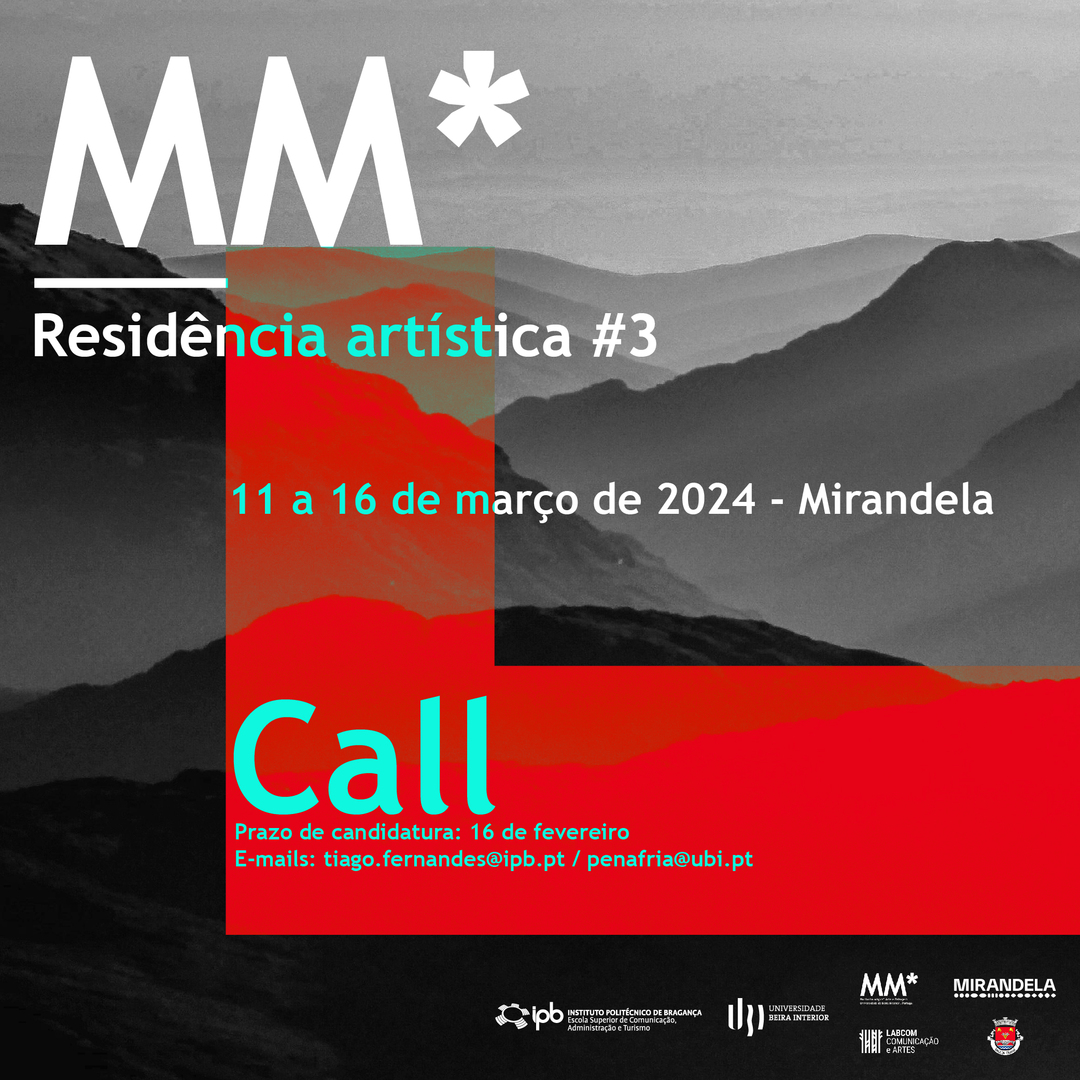
After the success of the previous editions in Vinhais (2019) and Seia (2021), RAMM – Artistic Residency Montanha Mágica* returned in 2024, with Mirandela as the setting. This is the result of a partnership between UPB’s School of Communication, Administration and Tourism (EsACT-UPB) and the Arts Department of the University of Beira Interior (UBI), involving students from both higher education institutions. The students have the opportunity to live an extremely enriching experience, both creatively and personally, enhanced by the intense exchange of experiences with the local community and the subsequent discussion of the results, as part of the Montanha Mágica* Art and Landscape Symposium (www.montanhamagica.ubi.pt).
The work of documenting and preserving the collective memory, traditions and visual and sound landscapes of the Trás-os-Montes region is under the guidance of teachers from both institutions and Trás-os-Montes director Rúben Sevivas.
All accounts assigned by UPB are personal and non-transferable, and the guarantee of identity is ensured by the possession of a secret key (password) held by each User.
Whenever authentication and access authorization is required, a user code and password will be used that meet the requirements described below, defined according to the user’s relationship and usage profile with the institution.